Mission Statement

Enercon’s mission is to cut customer fuel and maintenance costs and improve steam-related processes. Since 1989, our ‘fixed venturi’ system has saved money and solved boiler-to-return tank problems for small-to-Fortune 1200 plants in the refinery, lumber, plating, asphalt, chemical, paper, food and other steam-dependent industries. 

Tens of thousands of Enercon units have been installed in over 1,200 U.S., U.K. and Canadian plants. Over 500 of these plants replaced all conventional traps.  Others are converting in stages.  Reported fuel savings range from 8% to 40%.  Labor-intensive steam trap maintenance has been virtually eliminated. As reported in the Jan./Feb. 2006 Timber Processing magainze Boise Cascade's LaGrande, Oregon mill reports that "in five months, Boise saved $111,216 in natural gas, four times the cost of the [Enercon] traps. Conservatively, the new traps reduced by well over 10% the steam required to dry lumber and paid for themselves many times over in their first few months of use."

President & CEO and Finishers’ Management magazines reported that Enercon saved the country’s largest privately owned surface finishing company $108,000 in fuel and $20,000 in trap maintenance annually since 1996.  That’s the equivalent of eight ROI’s to date.

WIDE VARIETY OF STEAM APPLICATIONS

Enercon units have operated efficiently  for years on tracing lines, heat exchangers, unit heaters, humidifiers, drip legs and submerged coils.


WE'VE  BEEN SIZING STEAM SYSTEMS SINCE 1989

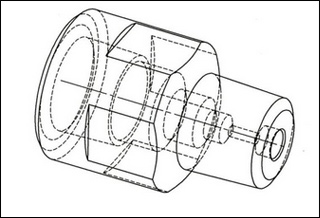
The real proof of our service and product is in our 40,000+ high- and low-pressure installations.  A fixed venturi operates on the well-known principle of two-phase flow.  It purges condensate efficiently when accurately sized by technicians experienced in venturi and steam systems operations. 

Enercon distributors, all with many years steam experience, have been with the company at least seven years.  They include a magna cum laude Mechanical Engineering Technology graduate and former GE Project Engineer and a former U.S. Navy Commander (M.S.M.E., B.S.E.E.) who worked on the Navy’s fixed orifice program while the fossil-fueled fleet was being converted to this technology.

CUTTING LABOR-INTENSIVE TRAP MAINTENANCE

Our condensate removal units are permanent. Conventional high- pressure traps need weekly to monthly inspection (Dept. of Energy, Energy Tips - 6-99).  In typical facilities,” reports Alliance to Save Energy (7-99), “15%-20% of steam traps will be inoperative… Replacing a low-pressure trap saves the user an average $2000 a year in energy costs. Replacing a high-pressure trap saves even more.”  Despite this, plant and maintenance management people tell us traps are a low priority, that they must focus on more critical problems.

Losses just from leaking traps can be substantial, particularly in large trap populations where maintenance crews have their hands full just inspecting and replacing failed traps. 'Even with annual test-and-replace programs,' reports Textile World (2-02), 'studies show the average trap has been leaking for 6 months before it is replaced.'

Basically, we boost a customer’s bottom line by permanently cutting their fuel, labor, parts and inventory costs. 


History of Enercon Systems Co.

David Walker started Enercon in 1989 by personally surveying each steam system.  By the mid-90’s, business increased to the point where it was necessary to set up a nationwide network of technically knowledgeable distributors, servicing the U.S., U.K., and Canada.   

Since 1989, Enercon's fixed venturi condensate removal system has improved the fuel and operational efficiency of hundreds of steam systems around the country.  

OUR SYSTEM SOLVES STEAM-RELATED PROBLEMS

‘Our objective,’ says Enercon President Dave Walker has never been just to install equipment. From the start, our business has been built on solving steam-related problems.  Most of our plant conversions started as projects dealing with problems such as high fuel costs, inconsistent temperatures, pressure drops, water hammer and maintenance headaches.  That’s why we always survey a system before deciding on a course of action.

‘As to the longevity and reliability,’ he says, ‘plants converted as long as 20 years ago have never needed a trap replacement.  And Enercon has completely converted over 180 plants, including 38 for a $30 billion petrochemical company and seven for a leading lumber manufacturer.

‘We utilize fixed venturi devices because we've found they do the best job of efficiently and continuously removing condensate. According to many studies and trade magazine articles over the past 40 years, malfunctioning traps lose excessive amounts of steam that cost industrial, commercial and institutional facilities billions of dollars annually.

KNOWLEDGEABLE PEOPLE PRODUCE GOOD RESULTS

Success of a fixed venturi installation depends on knowledgeable technicians with years of steam-related experience who understand how orifices work.  The technology doesn’t change. Venturi devices must be sized and applied by people who really understand the technology and how it applies to individual steam systems.

‘Our 20-year record speaks for itself.  With the procedures, data bases and the practical steam system experience we’ve accumulated during that period,’ says Walker, ‘we know our system will save fuel and maintenance for virtually any company that uses steam.’ 


Partial List of Enercon Systems Co. Clients

Select any underlined client to view a quote from their reference letter.

Boise Cascade, LaGrande, Oregon
TransAlta Energy Corp., Fort McMurray, Alberta
Hampton Affiliates (seven mills)

Leading Food Manufacturer
Major Surface Finishing Company
Worldwide Paper Co.
Nationwide Packaging Company
Large Midwestern Plating Company
Verdun Anodizing Inc., Verdun, Quebec
Major Petrochemical Company
Worldwide Biological Reagent Company
Large Chicagoland Industrial Plater
Midwestern Metal Finishing Company
Multi-Plant Midwestern Plating Company


References

BOISE CASCADE, LaGrande, Oregon

$111,536 FUEL SAVINGS IN FIVE MONTHS  

‘In five months, Boise saved $111,216 in natural gas, four times the cost of the [Enercon venturi] traps. During this period, LaGrande had its lowest steam use per-board-foot dried for any year evaluated, 0.49 pounds less than their 2000-03 average. Steam needs were cut 18,536,000 pounds which, at 12 therms per-thousand-pounds and $0.50/therm, resulted in the six figure savings. "To assure this was attributable to the traps and not ongoing drying efficiency improvements," says Rogers, "we compared 'therms/MBF' ratios from our Regional Energy Report. For each month before the trap installation, the ratio was higher than the prior 4-year average, but lower after the installation. This confirmed that the energy savings were from the new traps and were actually greater than the March-July data indicated." Conservatively, the new traps reduced by well over 10% the steam required to dry lumber and paid for themselves many times over in their first few months of use," Roger says.

Jared Rogers, Regional Engineer

Read story in Jan./Feb. issues of Timber Processing Magazine


TRANSALTA ENERGY CORP., Fort McMurray, Alberta

"SAVED A MINIMUM OF $150,000"


"We installed Enercon [venturi] units in early 2005 to prevent the failure of strainers and traps on outside steam lines in winter. Normally with -35° and -40° weather, we would get freezing steam traps and strainers.


"With our mechanical traps, there would be a pool of condensate in the bottom of the lines. When strainers and traps on outdoor lines froze up, the pools of condensate would be carried into the steam turbine blades and the blades would get damaged. The Enercon technician said that with properly-sized orifices operating on a continuous flow basis, we wouldn't have this problem.


"Since installing the [Enercon units], we have found that all condensate is removed from the pipes, and blades are not subjected to damage from condensate in freezing weather. We figure we saved a minimum of $150,000 from not having damage to the turbine we could otherwise have experienced. The [venturis] are being used for pressures ranging from 50 psig to 790 psig, and we have not needed to repair or replace the [Enercon units], which has been an additional cost savings. We are very satisfied with the results of the Enercon [venturi] condensate removal system installation, and we are continuing our program to replace mechanical traps with Enercon strainers and traps as the mechanical traps fail."


Robert E. (Bob) Laybourne P.Eng.

Engineering Supervisor, TransAlta PCPS


HAMPTON AFFILIATES, Washington and Oregon

NEW LEVEL OF CONSISTENCY, BETTER PLANER  
PERFORMANCE AND GRADE RECOVERY  

Quoted from July/August 2004 issue of Timber Processing Magazine

and January 2005 issue of Southern Lumberman


Based on the results of a six-month trial starting in March 2003, Hampton replaced the mechanical traps in all the kilns at a second Morton site and at its operations in Darrington, Packwood, Randle and Arlington, Washington.


"At Packwood," says Angus Low, Kiln/Boiler Lead for Hampton's Cowlitz Division, "we saw a six-hour (combined average) improvement in the time required to dry a charge of lumber. We were also able to run an additional kiln, which is something we couldn't do before. Overall, our kiln and boiler performance became much more efficient."


Steve Evans, Planer/Boiler Supervisor, points out that at the Randle mill steam goes through a pressure-reducing valve between the boiler and kilns. "Our target pressure," he says, "is 110 psi. Before the [Enercon venturi] traps were installed, we averaged 98. Since the installation we've averaged 105 psi, a 7 lb. improvement. Average steam flow at the boiler actually increased by 633 lbs. The operators say there's a noticeable difference in the volume of ash we now produce. Makes sense. If the kilns are maintaining a higher pressure, the boiler's not working so hard."


"Enercon just didn't sell us parts, Joe Hellem, Quality Control Supervisor says, they supplied design, technical backup, steam  system expertise and troubleshooting. They contacted us continually for updates on how the parts were working."


At Randle, says Hellem, the Enercon technician made suggestions which, when implemented, save 5,324 gallons of water a day, which at 360 operating days a year is 1.9 million gallons annually. This also cut water treatment costs and has had a significant environmental impact.


"One of the objections we had seen repeatedly on the internet and heard from numerous other sources," says Low, "is that the [venturi] is only effective in applications that produce steady, fixed condensate loads. This concerned us because our operations are all 'zone control' and we have a constant variable load situation. Based on a year's operations, these (venturi) traps perform with excellent in our varying load environment."


Major Surface Finishing Company

CUT FUEL USAGE 18% AND TRAP MAINTENANCE $20,000 ANNUALLY %      

Read story in Sept./Oct. 2001 issue of President & CEO Magazine and Nov./Dec. issue of Finishers' Management.


‘We replaced 500 conventional traps in our 140,000 sq. ft. facility with Enercon assemblies in early ‘96.  We’ve since purchased some 100 additional assemblies for new lines.  By converting our plant to the Enercon System, we reduced our fuel costs 18%, a total of $108,000 annually.   We were also able to reduce our boiler steam pressure 30%, from 50 to 35 psi.  Before installing Enercon assemblies, we were always repairing and replacing traps.  Trap maintenance on our large steam system has been virtually eliminated.  We’ve estimated savings in terms of traps purchased, plus the labor and downtime of maintaining and replacing them at some $20,000 annually.’  

Maintenance Supervisor

Multi-Plant Food Processor

BETTER QUALITY, QUICKER COOK TIMES,
$150,000 ANNUAL FUEL SAVINGS
 

‘Reduced plant steam pressure setting from 110 psig to 95 psig... average steam load reduced by five to seven thousand pounds/hour due to better heating in cooking vessels... estimated savings $150,000/ year... cooking processes improved with better temperature control and quicker cook times... improved throughput and product quality... no longer have to service traps; older system was a constant maintenance area... based on our good experience, we've informed our sister companies to investigate the Enercon System.’  

Plant Engineer


Worldwide Paper Co.
 INCREASED PRODUCT LINE SPEED 10%

'This last retrofit eliminated two pumps, large flash tank and constant water leaks... estimate annual savings at $28,000 (labor, steam leaks, trap replacement & parts, pump replacement, valves & piping)... increased heat transfer enabled us to increase product line speed 10%. This savings is well over double that mentioned above.'

Environmental Coordinator, 

Corrugated Container Plant

Large Midwestern Plating Company 
 STARTUP TIME CUT 37% 

‘In 1990, (we) replaced bucket traps with Enercon assemblies. This eliminated trap maintenance, which helped  reduce labor and downtime.  It allowed us to reduce overall pressure from about 12 psi to 8 psi. With the increased efficiency and reliability, we reduced startup time from 8 hours to 5.  In 1996, we re-tested our system and found all traps working  with no appreciable wear.  We continue to use the Enercon trap and have no interest in changing due to the above reasons.

Plant Engineer

Nationwide Packaging Company
 ELIMINATED CORRUGATOR PROBLEMS

‘We were having overheating and backpressure problems on our 87" Langston corrugator and our high pressure receiver was blowing. Dave said he could fix the problems, which he did. Backpressure went from 30 lbs. to 10-15 lbs., where it was supposed to be. Had venturis from 1992 to 2001 and didn't change one during that time. No water logging problems. Machine went from 700 fpm to 800 fpm in minutes.’  

Maintenance Manager


Major Petrochemical Company
 TRIPLED DAILY RISE IN TANK TEMPERATURE

‘… (Enercon units) have proven to be maintenance-free… installed on our large asphalt tanks and have seen a 3 degree/day rise in temperature compared to 1 degree/day with the bucket traps… the operators want more orifice traps.’  

Plant Manager

VERDUN ANODIZING INC., Verdun, Quebec
 ELIMINATED 100% OF TRAP PROBLEMS

‘We had constant downtime repairing and changing steam traps. An additional problem was maintaining adequate steam pressure in cold Quebec winters. The simple switch to Enercon eliminated 100% of the steam trap problems and gave us a bonus of lots of steam when the incoming water was 40°F... excellent follow-up after delivery. I'm sold!"  

W. Peter Bigney, Owner

Worldwide Biological Reagent Company
 GREAT PRODUCT

‘We placed almost 125 of the trap units in our 200,000 square foot facility in 1993 and have not had a problem with any of those units.  The time we’ve saved in autoclave trap maintenance alone has been very significant as these systems were previously a major headache requiring lots of attention, parts and pieces.  Thanks for providing us a great product that truly performs as well as advertised.’  

Facilities Manager


Large Chicagoland Industrial Plater
FUEL EFFICIENCY, FASTER STARTUP

‘Replacing our conventional steam traps with Enercon units (in 1998) resulted in better fuel efficiency, more consistent tank temperatures and faster start-up and recovery. It also eliminated trap maintenance. As we expand our plant (in 2002), we use Enercon units in all new lines.’

Plant Engineer


Midwestern Metal Finishing Company
 NEW BOILER NOT NEEDED

‘Our heating demands were not being met by two 80-hp boilers.  We were about to buy a new boiler and revamp the entire heating system for $100,000.  Enercon did an in-depth survey of our heating system from the boilers, steam coils, steam traps and gas-fired air make-up units.  The survey recommended replacing steam traps with Enercon assemblies.  Results to date include substantial gas saving, gain of 4-6 psi steam pressure, and eliminating the need to run both boilers.  This eliminated the capital cost of replacing boilers and heating system.

Plating Manager


Multi-Plant Midwestern Plating Company
 TWO PLANTS CONVERTED                

‘ … converted to the Enercon System in 1993 and converted a second plant soon after.’ (Third plant converted in 2002).

President

Copyright© 2004 Enercon Systems Co.  All Rights Reserved.